Listen here: https://record.reverb.chat/s/IJ6zeznDbU6sV8NuTJEn
Today I’m going to be talking about change. After reading the novel Zone One by Colson Whitehead, I’ve been really thinking about why humans struggle so much with change. It’s clear that change is an integral part of being a human, yet most of us, myself included, have an overwhelming fear of change. Over the past year and a half of my life, I’ve experienced a lot of change, as I’m sure many of you have. Some changes I dealt with better than others, so I hope you can relate and find comfort as I talk about why humans struggle with change, why acknowledging the past is important to moving forward, and how to deal with change.
I want to start by talking about how humans are not psychologically built for change. We’re conditioned, essentially from birth, to follow routine. As babies, our caregivers have us on a strict schedule of sleeping, eating, and going to the bathroom. As we get older, we follow an eight hour school schedule, followed by chores, sports, and homework. As adults, we continue this pattern. This all centers around the idea that predictability is good, and for the most part, I agree. Believe me, I cannot function without a meticulously planned Google Calendar. But, when I was reading Zone One, I realized that we can quickly become “zombies” by mindlessly doing the same things everyday. When the people’s routines were broken by the zombie apocalypse that happened, they simply could not deal with it. Everyone in the book suffered PASD (post-apocalyptic stress disorder), much like PTSD. People’s minds were literally breaking down and having seizures because of the trauma this change caused. My point with this is that, it’s valid to be afraid of change, because society has ingrained in us that predictability is good and change is bad.
So you’re probably thinking, “You say change is hard, but we have to go through it anyway. How can I deal with it without having a mental breakdown?” I’m going to talk about that in a minute, but I first want to talk about the importance of being able to grieve the past. Something that really struck me in Zone One was when it was said that, “Pain could be killed. Sadness could not” (Whitehead 249). It’s referencing that you could take meds to numb the pain, but you would always carry the grief of what you lost. The reason this is so important to me is because I graduated high school in the infamous Class of 2020. Within a matter of a week or two, the COVID-19 pandemic single-handedly took away my band trip, competitions, prom, and all graduation festivities. I was devastated to say the least. I should have had all these awesome things to close out high school, but I didn’t.
I was angry and so sad, and frustrated that I had no control over this thing that changed all my plans. But, the hardest part was that I felt like I was wrong to be upset over missing out on some fun activities when people were dying and losing their jobs. What’s funny about when I would try to suppress my emotions was that the emotions would still come out, just in unexpected ways. Like when I didn’t know what I wanted for dinner, I would start crying because my brain could not handle making a decision. No matter how insignificant you think your problems are or how insignificant people tell you your problems are, your emotions are valid. By being able to identify your feelings, it allows you to cope with them in healthy ways, instead of having random outbursts or breakdowns like I did. Like the quote from Zone One says, you’re always going to carry with you the emotions of a past event. So, by dealing with them in the first place, you’re able to move on much quicker.
The final thing I’m going to talk about is how we are supposed to deal with all of these changes happening in our lives. To be honest, it’s something that I’m still figuring out, but I’ve learned a few things that might be helpful to you. Something from Zone One that really made me think about better ways to deal with changes was the main character, Mark Spitz. It was weird to me that Mark seemed so well adapted to the apocalyptic world. However, he wasn’t waiting for the world to go back to normal. He took the situation he was in and figured out how to deal with it. He wasn’t worried about 10 years from now, only getting through the next five minutes. This made me realize that everyone saying “I can’t wait for the world to go back to normal” because of COVID-19 is living in the past. Yes, I want wearing masks, social distancing, and Zoom meetings to be done, but I hope that after all we’ve gone through, things are not the same as they were before. Honestly, what is “normal” when everything is always changing?
After dealing with the pandemic, we’ve all had to adapt and gain coping strategies, which I think helped me deal with the transition from high school to college. Although it’s hard to realize when you’re in the middle of a big change, you do pick up strategies that you can use in the future. For me, it was taking time by myself to make sure I was doing okay mentally. It really helped me, because there were a million and one things going on in my life, but in those moments, I could just focus on myself and what I was feeling then. You’ve already accomplished so much by handling the changes from COVID, not to mention all of the other changes in your life. It doesn’t diminish how difficult some changes in life will be, but you are far more equipped to handle these changes than others before you.
If you only take one thing away from this, I want it to be as scary as change can be, you cannot let the fear of it hold you back.
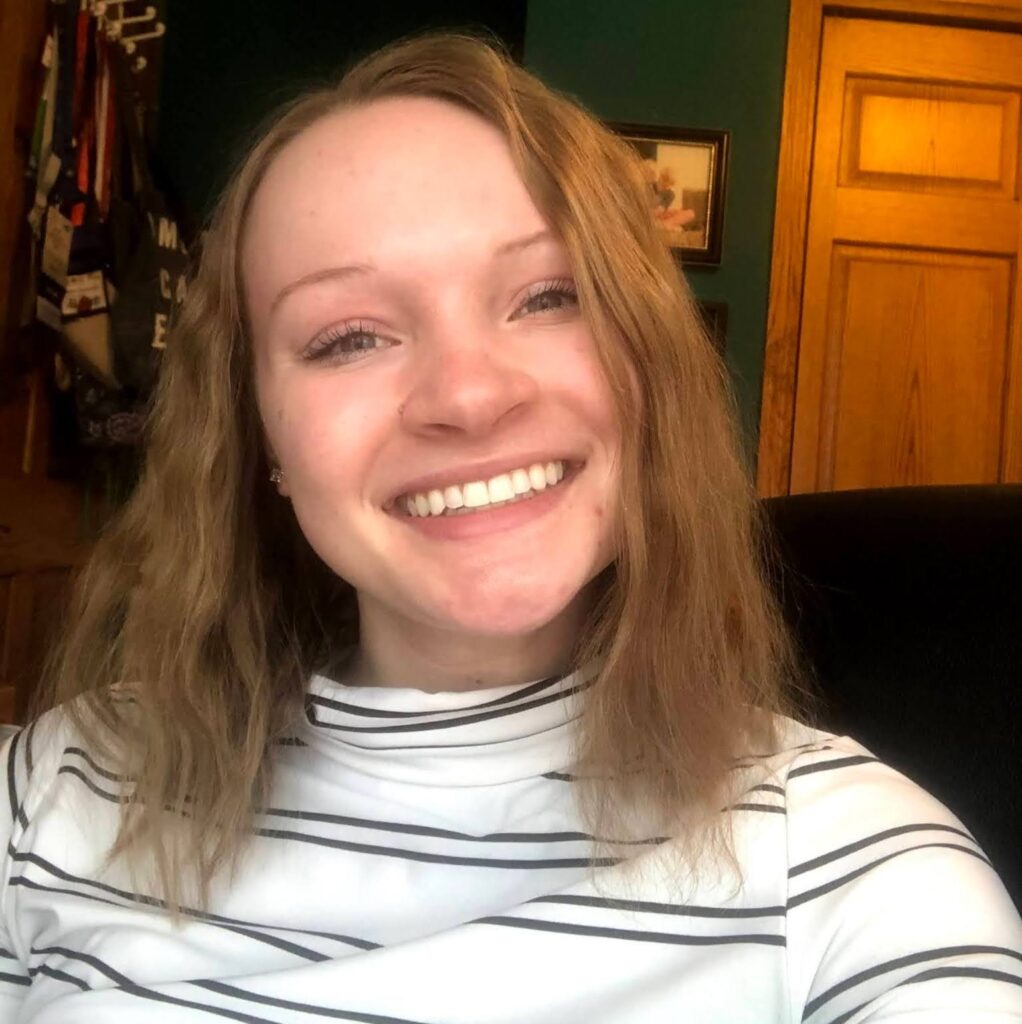
Elaine Schumacher is a Biology major and Psychology minor from Medford, Wisconsin. She was encouraged to discuss the challenges she has faced in the past year after reading Colson Whitehead’s novel, Zone One. Elaine dives deeper into why the pandemic has been difficult mentally and how we can use these unique challenges to cope in the future. In her free time, she enjoys hiking with her dogs and taking care of her many plants.